The most important day in US history is March 20.
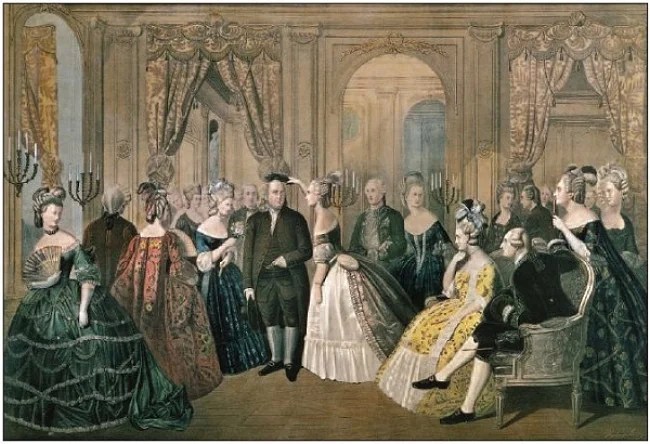
On March 20, 1778, Benjamin Franklin met King Louis XVI at the Palace of Versailles. It was the pivotal diplomatic event of the American Revolution (1765-1783), and Franklin played a crucial role in securing the first-ever US federal debt. It was Franklin who negotiated our loans from France, formalizing the financial and military aid that Louis XVI had been secretly providing to support the American cause.
Starting back in 1775, France had begun shipping war supplies through dummy corporations, and eventually provided loans totaling over $2 million (~$84 million in 2026 USD), most of which were arranged by Franklin. These funds were essential in supplying the Continental Army with arms, clothing, and naval stores.
The Dutch in St. Eustatius had been more than happy to sell Americans all the salt peter they could buy. Indeed, on Nov. 16, 1776, the American brig Andrew Doria, commanded by Captain Isaiah Robinson, sailed into the anchorage of St. Eustatius to purchase military supplies, including munitions and arms, from Dutch merchants on the island. This visit was significant not only for the trade but also because it marked the first international acknowledgment of American independence when the Dutch governor, Johannes de Graaff, returned a 13-gun salute from the Andrew Doria with an 11-gun salute from Fort Oranje, following international protocol.
Anyway, eventually the Treaty of Alliance between France and the United States was formalized on Feb. 6, 1778. And so, on March 20, 1778, Franklin, along with fellow envoys Silas Deane and Arthur Lee, was officially received by the king as a representative of the newly recognized United States.
You must remember that the US had no money. The Continental Congress faced severe financial strain and resorted to printing paper money, leading to hyperinflation, while also relying on foreign loans. After the war, the US struggled to repay its debts, defaulting on payments to France in 1785 and 1787. Under the new Constitution, Alexander Hamilton restructured US finances (yay!), and in 1795, American banker James Swan privately assumed the French debt, settling the US obligation and finally restoring American credit in Europe.
No debt = no weapons.
No weapons = no Continental Army.
No Continental Army = England successfully puts down the rebellion in its 13 colonies.
The American Revolution (1765-1783), you know, was the final, regional struggle of a much larger complex of wars. It was a revolution about taxes and spending rights, and was the final gasp of warfare that came out of the earlier and larger French and Indian War (1754-1763) that had spread across North America; and it itself was part of the global Seven Years’ War (1756-1763), which was basically Great Britain and Prussia against France and Austria. Great Britain won, sure, but arguably lost its most valuable colonial possession.
So it was sensible policy on Louis XVI’s part to support the rebels. He agreed to lend money to Benjamin Franklin on March 20, and if he hadn’t lent money to the rebels, there’d be no United States today.
This is why March 20 is the most important day in US history.
Note: Franklin’s appearance at court made quite a sensation. He deliberately wore a plain brown suit without a wig or sword, in stark contrast to the opulent court attire. This “Quaker” style emphasized American simplicity and republicanism, creating a powerful impression on the French court and public. During the audience, Louis XVI expressed his friendship for the American cause and satisfaction with Franklin’s conduct.
Sources: Barbara Tuchman, Wikipedia, and Myers & Monroe for the picture.
Categories: Uncategorized
 Gregory's Writings
Leave a comment